
From frustration to inspiration: improving the MDV data visualisation tool through user testing
a case study of our collaboration with Stephen Taylor from the Centre for Human Genetics
The Challenge – a useful tool but is it usable?
In March 2025, Stephen Taylor from the Centre for Human Genetics asked the User Experience (UX) Centre of Excellence (UXCoE) for help testing a new data analysis tool his team was building, the Multi Dimensional Viewer (MDV).
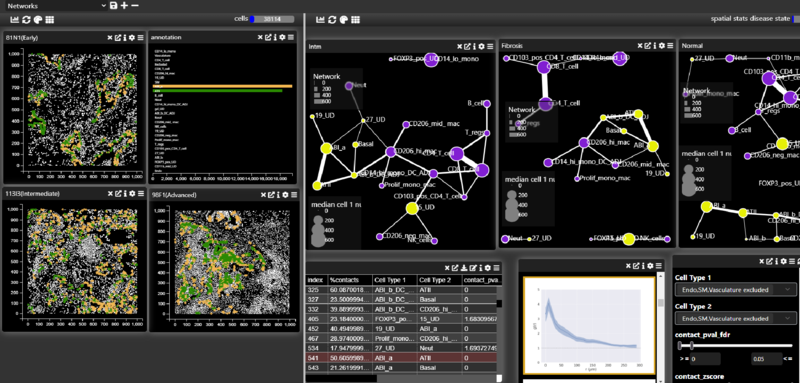
MDV is a platform that helps researchers manage and explore large, complex biological datasets. It supports the integration and analysis of data from various sources—like imaging, genomics, and proteomics—making it easier to visualise patterns and share insights across fields such as spatial biology and epigenetics.
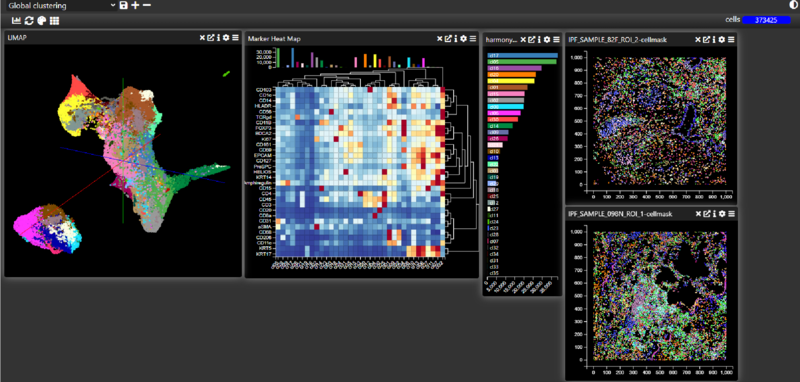
UXCoE & Centre for Human Genetics Collaboratively Plan Research Sessions
Focusing on testing the tool, not the data
Stephen, Head of Integrative Computational Biology, and his team wanted to share the tool with other researchers for feedback while it was still in development and saw value in enlisting UX processes and principles to handle the input in a constructive and actionable way and sought guidance from the UXCoE to do this.
The value of the tool wasn’t just in its data, but in how that data was delivered and experienced by users.
As Lead UX Researcher Kyree Holmes described it:
“Like separating the words from the book. The book can have a great story and we want to make sure it is presented in such a way that everything from the pages to the cover binding all create a beautiful experience.
In Steve's case, yes there is a lot of great data in MDV and lots to pick up on, but the platform was needed to add to that experience. We were looking at the form and function as well.”
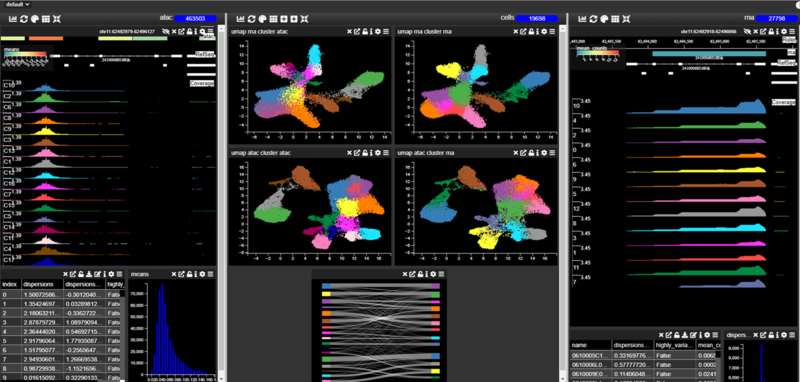
Designing a study script centred on usability
Moderated usability testing was chosen as the core method, where participants were asked to complete specific tasks using the tool while the team observed.
While Taylor’s team provided the specific, domain-related questions,
"the questions are really driven by us because they're quite demanding and specific"
The UXCoE offered essential guidance on structure and framing. This guidance proved crucial. Early versions of the test script focused on participants being able to find the correct answer to a question. Kyree helped shift the focus toward understanding how users got to an answer and their decision-making:
“We had to kind of recalibrate the way that the questions were asked. So, it's more, how do you get to the answer versus, you know, this is a quiz.”
This dynamic keeps the project's focus squarely on the tool's usability, not the research data.
Additionally, Steve tapped into his extensive network to recruit diverse researchers with expertise in various fields, even though the MDV prototype featured data on only one disease. Focusing on usability over content allowed participants to assess the tool’s functionality without being distracted by the specific data.
The Power of Leveraging UX Expertise with Subject Matter Expertise
Assigning roles for an all-around co-moderation strategy
With his deep knowledge of the subject, Taylor acted as the primary moderator, able to speak the users' language.
"I felt it better for him to be the primary moderator for the study... and me be from the UX perspective," Kyree stated. Kyree’s role as secondary moderator was to observe user behaviour, noting subtle cues that indicated usability issues.
Using the UX tactic of the beginner’s mindset to examine the basics
When working with a subject matter expert on a project, a UX researcher’s unfamiliarity with the topic, or beginner’s mindset, can be an advantage in projects involving specialised fields. Coming in with a fresh perspective encourages subject matter experts to explain concepts clearly and simply.
"…you have to teach me and you really need to break it down to me like I'm five years old!".
Adapting moderation style to surface UX challenges
Judging when to help, when to prompt, and when to listen is a common challenge when trying to balance supporting participants with giving them space for authentic interaction, especially when they’re struggling
"It can be... a little difficult to let go and not be a bit of a helicopter parent while people are doing the usability testing," Kyree admitted. “We have to pretend we’re not here—they’re on their own. Because we can’t be with them all the time”.
Taylor echoed this sentiment. "Of course there's a temptation if you're following somebody through to do it, but yeah…we restrained ourselves as much as possible."
Offering too much guidance can skew your data and introduce bias. Letting users struggle or improvise often reveals the most powerful insights. One example of this emerged from the tool’s multi-window interface, which allows users to open different datasets or visualisations simultaneously. Although this functionality aligned with Stephen’s vision, it raised important UX questions.
Observing users use MDV on small laptop screens exposed issues that the developers who use several large monitors had not considered resulting in optimising for smaller screens being added to the product roadmap.
Reflecting on a participant using a small laptop screen, Steven said:
"[It was a] useful data point, because then we thought, OK, remember we need to think about laptop screens usage".
The multi-window interface feature was meant to enhance power and flexibility, however, some participants lost track of which window they were in or how to navigate back.
Outcome & Post-Study Reflections
Building UX maturity for the Centre for Human Genetics
The sessions gave Stephen the opportunity to witness first-hand how his intended users (fellow scientists) actually interacted with the MDV platform.
“It was nice to see him get a little bit of validation too... people using this [MDV tool] and saying, ‘Oh, it’s cool. I really want to do some more with this.’”
The process also equipped his team with a new perspective and a clear path forward. Rather than viewing usability as a one-time evaluation, Stephen and his team started to recognise it as an ongoing process "road map for how we could do future user testing."
Kyree noted the importance of supporting Stephen’s development not just as a participant in UX research, but as someone who could eventually lead these activities independently.
Kyree stating, "I'd like to help him become more independent with his moderation. So we're talking about that for the next round". When asked if he could run sessions himself, Stephen affirmed, that he felt he could do so and the experience helped to positively “stretch” him and his team The project successfully equipped Stephen’s team with new practical skills as well as confidence in conducting user research. He also suggested that it would be "…good to teach other people [across the University] through lunch and learn type sessions…" to scale UX capability in product development.
Benefits for the UXCoE to improve our practice
What would we do differently?
Engage the UX Team at an earlier point. Earlier involvement would allow UX principles to be embedded in the foundational design, potentially avoiding the need to rework features that, while powerful, may not be intuitive.
Separate the testing of the tool from its training materials. Participants in the study were inclined to ignore prepared training materials. A future approach would be to first test the tool's intuitiveness and then use those findings to inform training materials.
Would we do this again?
Yes, without hesitation! The mentoring aspect of the support, was a deliberate goal, part of a broader effort to build lasting UX capability within teams across the University.
Stephen expressed his pleasure with the outcome and his desire to continue the relationship. "I think it's really useful…it’d be great to interact in the future".

